Hear
A 4-microphone array feeds a classifier trained on rotor harmonics. It runs on a Raspberry Pi 5 and only alerts when 2 of the last 3 half-second windows agree. Audio stays in a 1-second memory buffer and is never stored.
Passive drone detection · prototype v0
Small sensor nodes listen for rotor noise, estimate the direction it's coming from, and check whether the aircraft is broadcasting FAA Remote ID. When two nodes hear the same drone, the system works out where it is. Everything shows up on one live map.
Each node combines three cheap signals. None of them needs a camera or radar.
A 4-microphone array feeds a classifier trained on rotor harmonics. It runs on a Raspberry Pi 5 and only alerts when 2 of the last 3 half-second windows agree. Audio stays in a 1-second memory buffer and is never stored.
The time differences between the microphones give a compass bearing to the sound (SRP-PHAT direction finding), so every alert says which way to look.
The node listens for Bluetooth Remote ID, the broadcast most drones flying in the US must send. A drone you can hear but that isn't broadcasting is flagged at the highest severity.
When two nodes hear the same aircraft within a few seconds, their bearing lines cross. The crossing point is plotted as a position fix. More nodes means more coverage and better fixes.
A small web app, written in standard-library Python, that runs on a laptop, a spare Pi or a server.
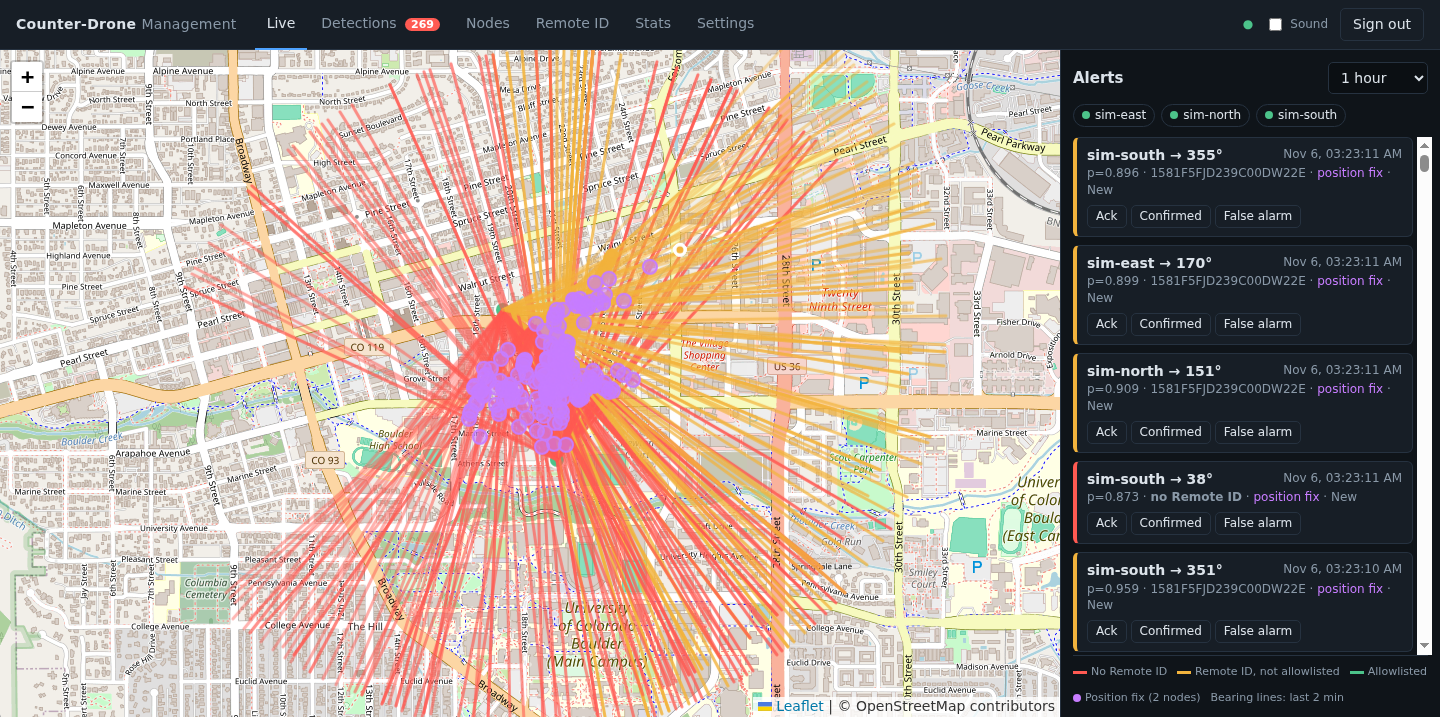
Bearing lines, position fixes and an alert list that updates as detections arrive, with an optional sound for drones with no Remote ID.
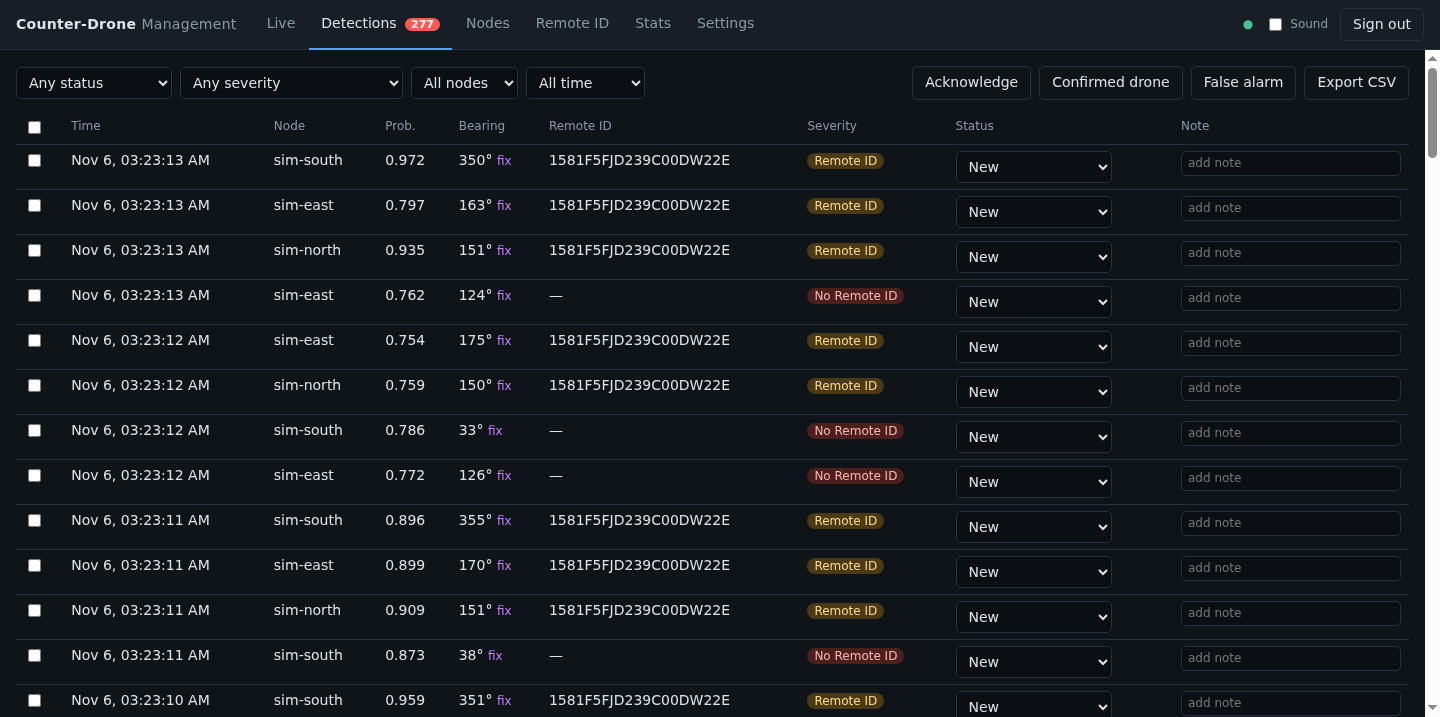
Mark each detection as acknowledged, a confirmed drone or a false alarm, add notes, and export to CSV.
See every broadcast heard, including drone and pilot positions. Allowlist your own aircraft so they don't raise alarms.
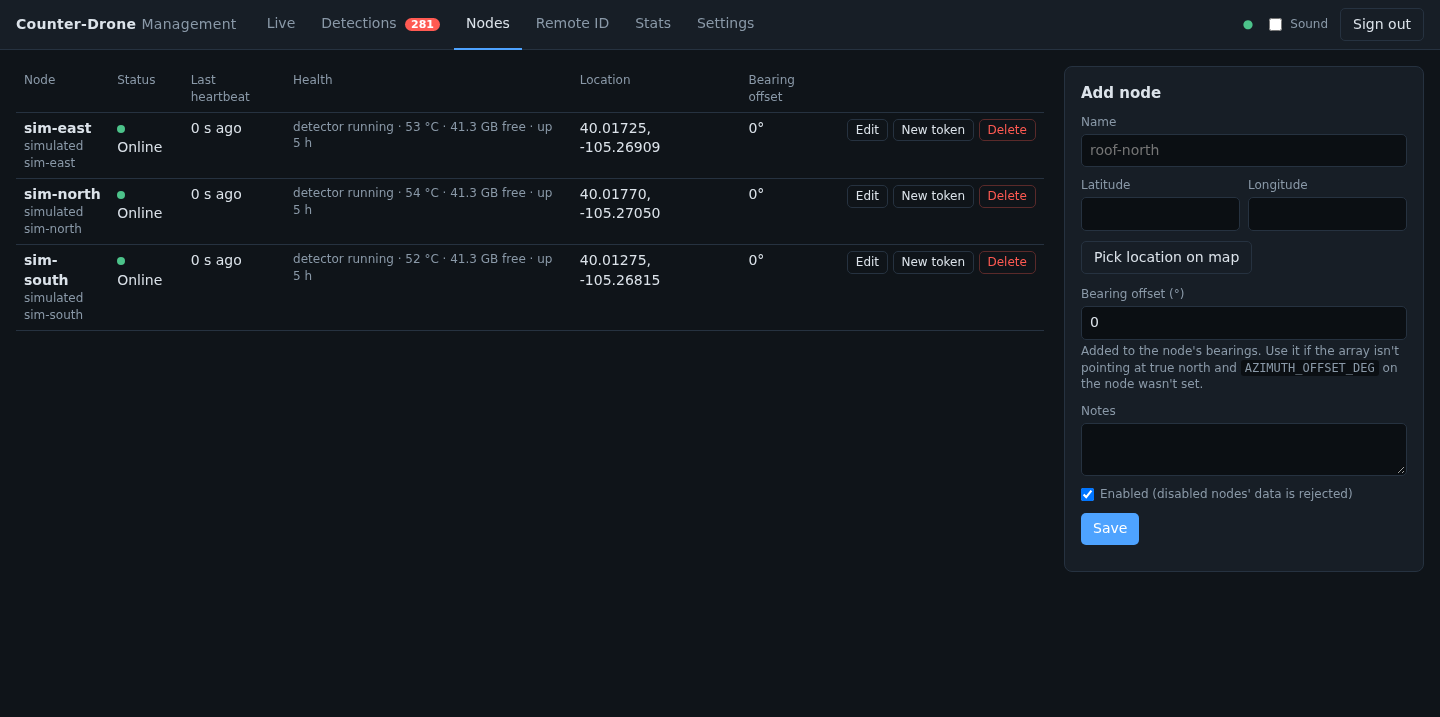
Each node checks in every 15 seconds with detector status, temperature, free disk and uptime. Offline nodes turn red.
False alarms per day and precision for each node, calculated from your own reviews, so you can see how it's performing on your site.
No database server, no extra installs. Each node runs a small uplink that retries automatically if the connection drops.
Off-the-shelf parts, about $230 per node at late-2026 US retail. Check prices before ordering.
| Raspberry Pi 5, 8 GB + active cooler + 27 W supply | $97 |
| Seeed ReSpeaker USB Mic Array v2.0 (4 mics) | $75 |
| 64 GB microSD (A2) | $12 |
| Windscreen for the array | $10 |
| ESP32 board as a Remote ID test transmitter | $8 |
| Tripod or mast mount | $25 |
| Core node | ~$230 |
Optional for field use: power bank and IP65 enclosure (~$60). Later upgrades include a Hailo AI HAT, camera, Wi-Fi Remote ID adapter, a 7-mic array and a HackRF for passive RF detection.
The system never transmits, jams, spoofs or takes over a drone, and it doesn't decode control or video links. It only receives sound and the public Remote ID broadcast.
In the US, only certain federal agencies are authorized to interfere with drones. This system gives you awareness and evidence: when, where, which direction, and whether the drone was identified. Response stays with whoever is authorized to act.
Real-world range and accuracy haven't been measured yet. The numbers above come from synthetic tests.
The dashboard is running on this machine with simulated nodes and drones.
Open the dashboard